
Affiliate disclosure: As an Amazon Associate I earn from qualifying purchases. CleverlyFound may earn a commission from qualifying purchases through Amazon Associates.
Start with the bag you already use
Travel organisers can give small items a predictable place inside luggage. However, they work only if they fit your bag and your travel routine. Before choosing any accessory, think about the things you need to reach during a journey. A charging cable may need to remain accessible, while spare clothing can stay deeper inside the bag.
First, check the usable dimensions of your luggage. Then, group the items you normally carry by purpose. This helps you decide which organisers could be useful without adding unnecessary bulk. A weekend trip, a daily commute and a longer holiday all call for slightly different arrangements.
1. Packing cubes for clothing groups
Packing cubes provide separate compartments for clothing within a larger bag. For example, you might keep tops together and place socks in a smaller cube. This can make it easier to identify a group of items without unpacking everything. However, cubes take up space and add weight.
Compare the external dimensions with the shape of your luggage. In addition, inspect the opening style and fabric information. A wide opening may make folding simpler, while mesh can help you recognise the contents. Choose sizes that match your clothing rather than collecting a set with compartments you will rarely use. Compression designs also require realistic expectations about volume.
2. Cable pouches for small electronics
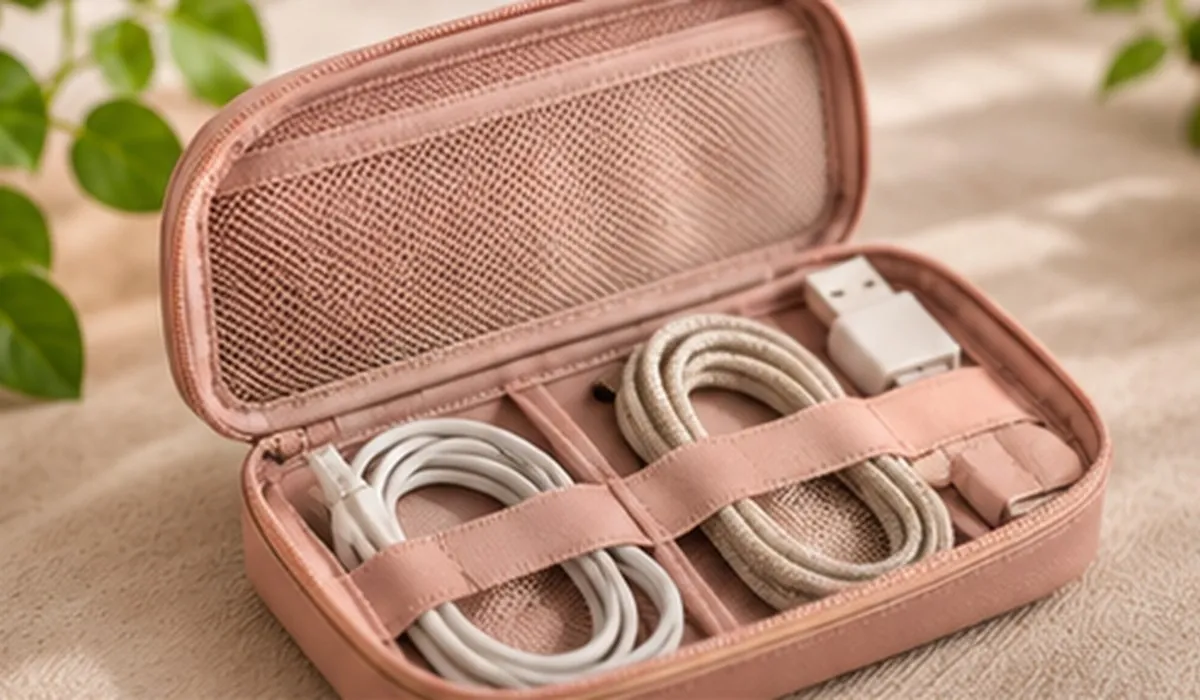
A cable pouch can hold chargers, short leads and compatible adapters in one place. This is particularly handy if you travel with more than one device. However, an oversized pouch can become another bulky object inside a small backpack. Check the internal dimensions, compartment shapes and closure design.
For example, elastic loops may hold some cables neatly but could be too narrow for thicker leads. A pocket may suit a small adapter if it closes securely. Also, consider whether you need access to these items during transit. Store the pouch where you can reach it without removing larger belongings.
3. Toiletry bags for personal essentials
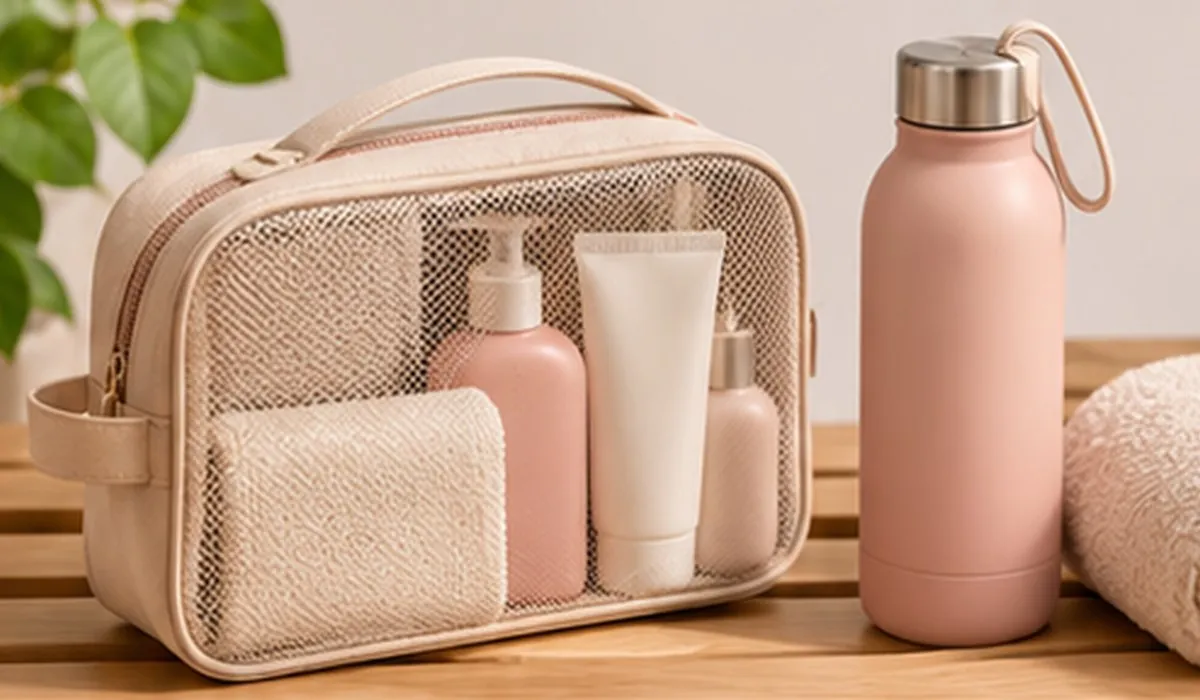
A toiletry bag separates grooming items from clothing and electronics. However, no bag should be assumed to contain leaks unless its specifications support that claim. Check the lining, closure and care instructions. A hanging design may suit accommodation with limited bench space, provided a suitable hook is available.
Conversely, a simple flat pouch may fit a smaller bag more easily. Before packing liquids, secure containers according to their instructions and check current transport requirements with your carrier. In addition, consider how you will clean and dry the bag after travel. Separate damp items where appropriate rather than leaving them sealed with dry belongings.
4. A document pouch for important small items
A slim document pouch can help keep tickets, paperwork and other essential documents together. However, the right arrangement depends on the documents you actually need. Some people carry printed booking details, while others rely on digital information and a few physical items. Check the pouch dimensions and how securely it closes.
For example, a long passport holder may not accommodate folded paperwork without creasing it. Think about access as well. Items needed frequently should be easy to retrieve while remaining secure. Keep sensitive documents protected and follow your own travel security practices. A convenient pouch does not replace careful handling of valuables.
5. A reusable bottle that fits your bag
A reusable bottle can be useful for carrying drinks where permitted. However, capacity alone does not determine whether it suits your journey. Check its height, diameter, weight and the design of the lid. For example, a narrow bottle may fit an existing side pocket, while a wide insulated version may require more room.
Read the cleaning and temperature guidance before using it with particular liquids. Similarly, check current transport rules for liquids and empty bottles where relevant. A bottle should fit the way you carry your bag. If it constantly takes up the space needed for other items, a different size may make more sense.
Compare organisers by access and weight
The easiest organiser to reach is not always the largest. Instead, consider how often you need its contents and how much space it occupies. For example, a small cable pouch near the top of a backpack may be more convenient than a large compartment buried under clothing. Likewise, a packing cube can stay inside luggage until you reach accommodation.
Check empty weights if your carrier imposes luggage limits. In addition, remember that rigid cases may occupy space differently from flexible fabric pouches. A mixture of shapes can work, but each item should have a reason for being there. Avoid filling spare compartments merely because they exist.
Make a packing routine that is easy to repeat
Lay out the things you plan to carry before placing them into organisers. Group clothing, electronics, personal items and documents separately. Next, decide which groups need quick access. Place larger, less frequently used items first, then fit smaller pouches into accessible areas.
However, keep fragile objects protected and avoid placing heavy items where they could crush delicate belongings. Once the bag is packed, check that zips close comfortably without pressure. You can also unpack and repack once to see whether the arrangement feels intuitive. If something seems awkward at home, it may become more inconvenient during a busy journey.
What to check before choosing travel organisers
Compare the external dimensions, material information, closures, care instructions and empty weight. In particular, look at the actual space inside a pouch, because thick padding can reduce usable room. If you carry electronics, check whether the compartments suit the items you own. For luggage, confirm the current rules that apply to your carrier and destination.
Product descriptions cannot establish every travel requirement. Furthermore, a matching set is not essential. You can combine existing pouches with one additional item if that solves a specific problem. A thoughtful arrangement often comes from choosing fewer pieces that perform distinct tasks.
A weekend example: choose only what helps
For a short weekend trip, start with the clothes and personal items you actually need. One packing cube may be enough for a small group of clothing. Meanwhile, a compact cable pouch could keep a charger and lead together. If your toiletries already fit securely inside an existing bag, there may be no reason to replace it.
Consider whether a separate document pouch is necessary for the particular trip. Also, check that a reusable bottle fits your luggage and the travel conditions. This example illustrates why a full matching collection is optional. A smaller arrangement may be more suitable.
A longer trip: organise around access
For a longer trip, separate items you need during transit from those intended for accommodation. Keep essential documents secure and accessible according to your travel arrangements. Similarly, position frequently used charging accessories where you can reach them.
Clothing groups may fit into larger cubes, but check the available space before relying on them. In addition, leave room for items you will need to repack during the journey. A bag that closes only when everything sits in one exact position can be awkward to manage. The arrangement should support ordinary travel tasks, including finding an item without unpacking every compartment.
Care and storage between trips
Once you return home, empty the organisers and inspect their condition. Follow the care instructions for each material, especially if an item has been exposed to moisture or spills. Let components dry as appropriate before storage. Check closures and seams for damage before using the accessories again.
In addition, remove documents or personal items that should not remain inside a stored bag. Keeping related travel accessories together may make preparing for the next trip easier. However, avoid keeping unnecessary duplicates simply to fill compartments. The purpose of a travel organiser is to make your belongings manageable, both during a trip and afterwards.
Choose an organiser that is easy to recognise
A pouch can help you find a group of items, but only if you can recognise it quickly. For example, different textures or colours might help distinguish a cable pouch from a toiletries bag. Alternatively, a simple label or a consistent packing location could serve the same purpose. However, avoid depending on a label alone for items that need secure handling.
Consider how the bag opens and which compartments remain accessible when other belongings fill the surrounding space. If you travel with another person, agree on where shared items belong. This may reduce unnecessary searching without adding another accessory. Before your next trip, check your layout against the actual bag and the things you plan to take. A recognisable arrangement can be more useful than a collection of identical pouches.
Final thoughts: keep the trip, not the clutter
Travel organisers are worth considering when loose belongings make a bag harder to use. Packing cubes, cable pouches, toiletry bags, document holders and suitable reusable bottles each address a different need. However, you do not need all five for every journey. Begin with your bag, your usual belongings and the things you need to access most often.
Then, choose the accessories that genuinely support that arrangement. Check current specifications and relevant travel requirements before making a purchase. The aim is not to create a picture-perfect suitcase. Rather, it is to make the things you need easier to find when you need them.