
Affiliate disclosure: As an Amazon Associate I earn from qualifying purchases. CleverlyFound may earn a commission from qualifying purchases through Amazon Associates.
Why CleverlyFound exists
CleverlyFound everyday finds start with a simple question: what would make this part of your day easier? A kitchen drawer that sticks, a tangled charger or a bag full of loose items can all prompt that question. However, buying another thing does not automatically solve it.
Sometimes the answer involves changing a habit, using something already at home or choosing a simpler design. Our website exists to explore those possibilities before pointing towards a product. We write for Australian readers who enjoy useful discoveries but prefer to understand their options first. In particular, we look at small details that can change how an item fits into a routine.
1. Begin with the task, not the product
A useful recommendation starts with a clear task. For example, a drawer divider might help separate utensils, but it cannot create more cupboard space. First, consider what actually causes the inconvenience. Are objects hard to reach, difficult to see or simply too numerous?
Next, identify the smallest change that could help. A new organiser may suit one household, while a rearrangement may work better for another. This approach also helps readers avoid buying duplicates. Instead of treating every attractive item as a solution, we ask what role it would play. That is the difference between noticing a clever detail and collecting things merely because they look interesting.
2. Make room for ordinary details
Product descriptions often emphasise the most impressive feature. However, an ordinary detail can matter more during everyday use. A removable liner may make cleaning easier. Similarly, a wide opening may help someone reach the contents of a bag.
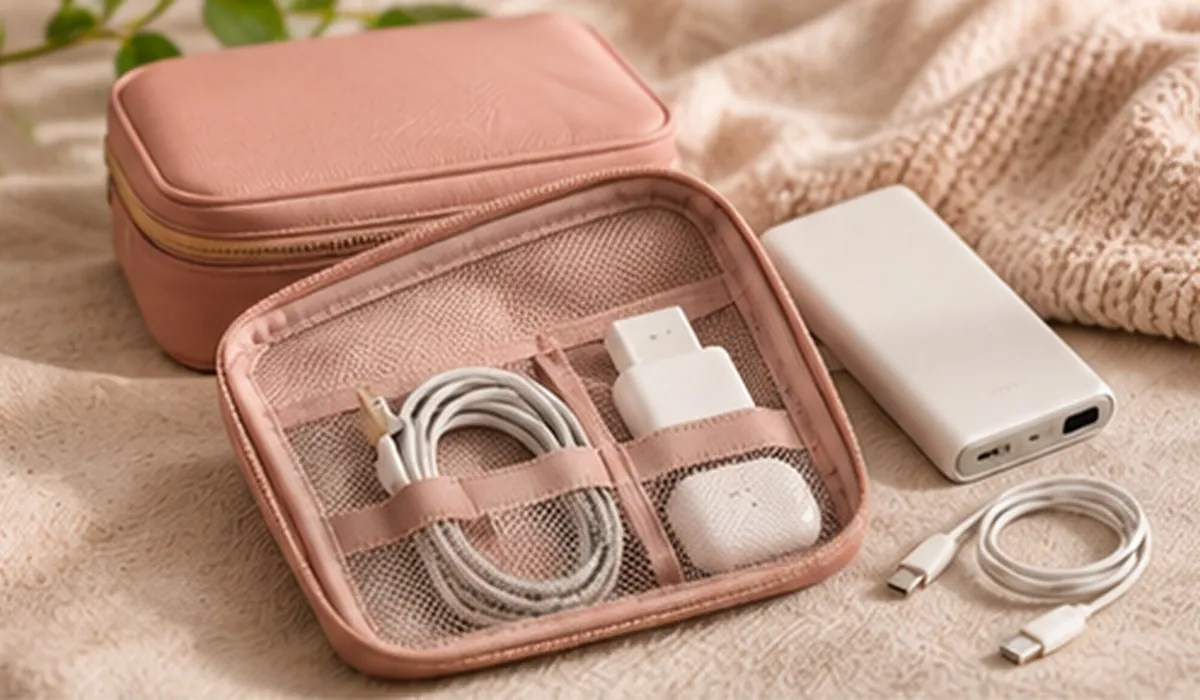
A stable base can matter more than decorative finishes on a desk accessory. We enjoy examining these less dramatic aspects because they connect product design with real routines. For example, when considering a travel pouch, we look beyond its appearance. We ask whether compartments can accommodate cables, whether the zip opens widely and whether the pouch fits the bag someone already uses. These questions help give a recommendation context.
3. Understand where a product fits
No single design suits every household. A large organiser may serve a family with a deep kitchen drawer, but it could crowd a compact apartment. Likewise, a charging stand may suit a bedside table, while a flat charging pad may better fit a shallow shelf. Therefore, we explain who might benefit from a particular feature and who might prefer another approach.
Australian homes and routines vary considerably. Some readers commute by train, some drive, and others work from home. Rather than assume everyone shares the same priorities, we describe the situation first. A useful article should leave room for readers to disagree with a recommendation and still learn something.
4. Compare information without pretending to test
Our guides draw on publicly available product descriptions, specifications and relevant consumer feedback where appropriate. However, this does not amount to hands-on testing. We do not claim to own products or invent results from personal experience. Instead, we distinguish between a listed feature and a possible practical benefit.
For example, a manufacturer might specify a removable cover. That tells us something about construction, but it does not prove how long the cover will last. Similarly, feedback can identify questions worth asking, but a single opinion cannot establish universal performance. We encourage readers to check the current listing, instructions and compatibility details before making a decision.
5. Keep the final choice in your hands
A recommendation should support a decision, not make it for you. Therefore, our articles explain potential limitations alongside useful features. You might discover that a product requires more space than you have, or that a simpler option already meets your needs. That is a worthwhile outcome.
We do not operate a shop, manage stock or process payments. Instead, CleverlyFound provides editorial content and may link to external retailers in future articles. Readers can use the information without following any link. Ultimately, our aim is to make shopping feel more considered, with enough context to decide what belongs in your routine.
What you can explore on the website
The Home & Living Finds category covers practical household helpers, from storage to everyday organisation. Meanwhile, Smart Gadgets & Accessories explores useful technology and the details that affect compatibility. On-the-Go Essentials focuses on portable items, packing and travel routines. Personal Care & Daily Comfort looks at ordinary grooming and comfort accessories without making medical claims.
Finally, Work, Study & Organisation covers tools that help people arrange their spaces and tasks. Each category has a different setting, but the editorial approach stays consistent. We begin with a need, explain relevant product features and identify the questions worth asking. The Clever Edit brings these articles together.
How affiliate links support the website
CleverlyFound participates in Amazon Associates. If future articles contain affiliate links, qualifying purchases may generate a commission for the site. However, readers do not pay an additional fee for using those links. This welcome article contains no affiliate product links.
We disclose the relationship because readers deserve to know how editorial websites may earn income. The presence of an affiliate arrangement does not establish retailer endorsement. Furthermore, CleverlyFound does not control retailer prices, delivery arrangements, availability or returns. Check the relevant retailer for current information if you decide to purchase something. Our separate Affiliate Disclosure page explains the relationship in more detail.
A practical way to read our guides
Start by identifying the situation that brought you to an article. Then, compare the suggested features with your own priorities. For example, if you need a compact accessory, dimensions may matter more than an extensive list of functions. If cleaning is important, inspect how components separate and which care instructions apply.
After that, consider the alternatives, including products you already own. You can also use the guide to prepare questions before visiting a retailer. A short list of requirements often makes comparison easier. Rather than remember every feature, write down the two or three things that matter most to your intended use.
Before you choose: a short set of questions
What do I want to make easier? Which existing item could already help? How much space do I have? Which features matter most to me, and which ones would I rarely use?
These questions work across the categories on CleverlyFound. For example, before choosing a kitchen accessory, check whether it will fit the drawer or cupboard where you intend to store it. Before choosing a gadget, verify that it supports the devices you own. Likewise, consider how often you will need to clean or maintain an item. A little preparation can make a product description much more useful.
Why more information is not always better
A long specification list can be helpful, but it is not the same as a clear recommendation. Instead of treating each feature as equally important, identify the ones that affect the intended task. For instance, a travel pouch may have several pockets, but their sizes and access points matter more than the number alone.
Similarly, a desk accessory might have a striking finish, yet its footprint could be the deciding factor. We aim to connect the relevant information to a recognisable situation. Consequently, readers can concentrate on the questions that matter to them rather than trying to compare every possible detail.
A note on feedback and corrections
Product information changes, and readers may notice details that need clarification. We welcome constructive feedback about our guides, including suggestions for topics and corrections to factual information. If you spot something that seems outdated, please let us know through our contact page.
However, questions about an individual order, delivery or warranty belong with the retailer or seller. CleverlyFound does not handle transactions. We value clear explanations and practical questions because they help keep editorial content useful. When you next visit the website, we hope you find an idea that suits your circumstances and enough information to decide for yourself.
What a useful comparison looks like
Imagine two organisers intended for the same drawer. One divides the space into fixed sections, while the other lets you move its boundaries. The first might suit a collection of similarly sized items. However, the second could accommodate belongings that change over time. To compare them fairly, we would consider the actual dimensions, the installation instructions and the kinds of objects each arrangement can hold.
We would also explain why a reader might prefer neither option. For example, an existing container could already provide enough separation. That comparison offers more practical context than a ranking based on popularity alone. The same principle applies to other everyday finds, from charging accessories to portable storage. Ultimately, a good guide should help you make a decision based on your situation, not on the number of features in a listing.
A little curiosity goes a long way
Good finds have good reasons. That idea shapes the articles you will see on CleverlyFound, from a simple explanation of drawer dividers to a guide about travel accessories. We hope the website becomes a useful place to return whenever an everyday task prompts a question. In the meantime, explore the categories that match your interests and take the time to consider what fits.
You do not need to replace everything or follow every suggestion. Instead, choose the ideas that make sense for your circumstances. A thoughtful decision can mean buying something, keeping what you have or deciding to wait. All three are valid outcomes.